
Insert Molding Solutions for Prototyping and Production
Insert molding solutions give engineers, product designers and NPI teams a way to combine multiple components into a single molded part. By placing an insert into a mold and injecting plastic around it, insert molding can add threads, electrical contacts, structural reinforcement and other functions while reducing separate assembly steps.
RevPart provides insert molding for projects ranging from prototypes and product validation to production. Our team can help evaluate your materials, insert geometry, tooling and part design to determine whether insert molding is the right manufacturing approach for your application.
Insert Molding Solutions and Applications
Insert molding can accommodate metal, plastic and specialty components that need to become a permanent part of a molded assembly. The right approach depends on the function of the insert, the surrounding resin, required tolerances and production volume.
Insert Injection Molding
Insert injection molding places a preformed component inside the mold before molten thermoplastic is injected around it. After the plastic cools, the insert remains captured within the finished part.
Common applications include threaded fasteners, bushings, pins, electrical contacts and other components that benefit from greater strength or functionality than molded plastic alone can provide.
Insert Molding vs. Overmolding
Insert molding and overmolding both combine multiple materials or components, but they are not the same process. Insert molding generally surrounds a pre-positioned insert with plastic in a molding operation. Overmolding typically adds another polymer or elastomer over an existing substrate.
For example, insert molding may be used to secure a threaded brass insert inside a plastic housing, while overmolding may be better suited for adding a soft grip, seal or impact-resistant surface.
How the Insert Molding Process Works
The insert molding process begins by placing the required insert into a precisely designed mold. Inserts may be loaded manually for prototypes and lower-volume production or through automated systems when higher volumes and placement consistency justify automation.
Once the insert is located and secured, molten plastic is injected into the cavity. The resin flows around designated areas of the insert before cooling and solidifying into an integrated component. Gate placement, injection pressure, material flow and cooling all need to be considered so the insert stays in position and the surrounding plastic fills correctly.
After molding, the part is ejected and inspected. Depending on the application, post-processing may include trimming, dimensional inspection, thread inspection or other quality checks.
Designing Reliable Insert Molded Parts
Good insert molding starts with design for manufacturability. The insert, plastic material and mold need to work together so the finished component can withstand its intended mechanical, thermal and environmental conditions.
Material Compatibility and Insert Selection
Metal insert molding commonly uses brass, stainless steel and aluminum components to add threads, reinforcement, electrical conductivity or other functional features to molded plastic parts. Insert molding can also incorporate pre-molded plastic components, engineering plastics and specialty inserts such as electrical contacts, sensors or ceramic components.
Thermoplastics such as nylon, ABS and polycarbonate may be used depending on the application. Material selection should account for operating temperature, chemical exposure, mechanical loads and differences in thermal expansion between the insert and surrounding plastic.
Mechanical Retention and Mold Design
An insert needs to remain securely positioned during molding and throughout the life of the part. Knurling, grooves, undercuts and other mechanical locking features can help the plastic grip the insert and resist pullout or rotation.
Designers also need to consider the amount of plastic surrounding an insert. Insufficient material around a threaded or structural insert can create concentrated stresses and increase the risk of cracking. Insert geometry, boss design and material properties should therefore be evaluated together rather than independently.
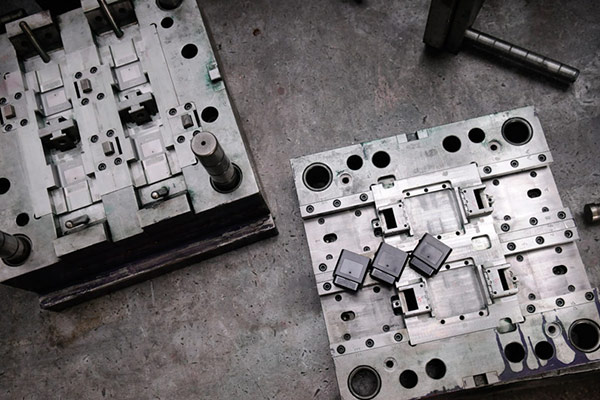
Gate location, venting and cooling are equally important. Resin must flow effectively around the insert without moving it, trapping excessive air or producing inconsistent cooling. RevPart can review these factors as part of the DFM process before tooling begins. You can also review our injection molding design guidelines for additional guidance on designing moldable plastic parts.
Benefits of Insert Molding
Insert molding can provide both performance and manufacturing advantages when the part is designed for the process.
Instead of molding a plastic component and installing hardware afterward, manufacturers can integrate inserts during molding. This can eliminate secondary assembly operations, reduce handling and help improve consistency across production runs.
Metal inserts can also provide durable threads and reinforcement in locations where repeated fastening or mechanical loads would place too much stress on plastic alone. Electrical contacts, pins and similar components can be held in precise positions while reducing the number of individual pieces that must be assembled later.
The result can be a stronger, more compact component with fewer production steps and lower total assembly costs.
Common Insert Molding Applications
Insert molded parts are used wherever a molded component needs added strength, electrical functionality, fastening points or permanently integrated hardware.
Medical Devices
Medical applications may use insert molding for components such as needle hubs, fittings, connectors and other parts that combine molded polymers with functional inserts. Material selection, traceability, product requirements and downstream processing should all be considered early in development.
For applicable programs, RevPart can also coordinate Gamma or E-beam sterilization through third-party sterilization providers and provide validated medical packaging and sealing before sterilization.
Consumer Electronics
Insert molding can integrate electrical contacts, connector components, grounding features and fastening hardware into compact electronic housings. Combining functions within the molded part can reduce separate assembly steps when space and repeatability are important.
Automotive, Aerospace and Industrial Parts
Structural inserts, bushings, threaded fasteners, electrical contacts and similar components are common across automotive, aerospace and industrial applications. Insert molding can be particularly useful when components must tolerate repeated loads, vibration, elevated temperatures or demanding operating environments.
Is Insert Molding Right for Your Part?
A good candidate for insert molding generally needs a permanent connection between a molded plastic component and an insert that provides mechanical, electrical or structural functionality.
When evaluating the process, consider:
- What load or function the insert must handle
- Whether the insert and resin are compatible
- Operating temperatures and chemical exposure
- Required positioning and dimensional tolerances
- Prototype and anticipated production volumes
- Whether manual or automated insert loading makes sense
- Whether eliminating downstream assembly justifies the tooling investment
Working through these questions during DFM can help prevent expensive tooling changes later.
Frequently Asked Questions About Insert Molding
Q: What is an insert in molding?
A: An insert is a preformed component placed inside the mold before plastic is injected. Inserts may include threaded hardware, bushings, pins, electrical contacts, plastic components or other functional elements that become part of the finished molded component.
Q: What is an insert moulding machine?
A: Insert molding generally uses an injection molding machine and a mold designed to hold the insert securely while resin is injected around it. Depending on production requirements, inserts may be positioned manually or with automated loading equipment.
Q: Does insert molding increase initial tooling cost?
A: Insert molding can require more complex tooling than a comparable conventional molded part because the mold must accurately locate and protect the insert. However, integrating components during molding can reduce secondary assembly, labor and handling costs. The relevant comparison is usually total manufacturing cost rather than tooling cost alone.
Q: Can standard metal inserts be used?
A: Yes. Many applications use commercially available threaded inserts, bushings, pins or other standard components. Custom inserts may be needed when the part requires specialized geometry, electrical functionality, unusual materials or application-specific retention features.
Q: What production volumes are suitable for insert molding?
A: Insert molding can support prototypes, low-volume programs and production applications. The economics of tooling and insert loading should be evaluated against the required volume. Manual loading may make sense for lower quantities, while automation becomes more attractive when higher volumes require greater throughput and consistency.
Why Choose RevPart for Insert Molding Solutions?
RevPart helps customers move from early product development to production with manufacturing processes selected around the needs of the part.
Our broader capabilities include plastic injection molding, CNC machining, 3D printing and other prototype and production services. That gives engineering teams multiple options when evaluating how a design should be built instead of forcing every project into the same manufacturing process.
Whether you are validating an early design, preparing a low-volume run or developing a production-ready insert molded part, our team can review your CAD files and help identify material, tooling and DFM considerations before production begins.
Ready to determine whether insert molding is right for your design? Send RevPart your CAD files and project requirements for a quote. Our team can review your application, discuss insert and material options, and help you develop a practical path from prototype to production.